Non-communicable diseases, commonly known as NCDs are growing and represent an increasingly significant burden of ill health and death.
- NCDs currently account for 3 in 10 deaths in the country.
- According to the Uganda’s STEPS survey 2023, one of the leading risk factors driving this burden is the excessive intake of unhealthy foods and beverages that are high in sugar, salt, and fat and are linked to diet-related NCDs like cancers, stroke, cardiovascular diseases, diabetes type 2, overweight and obesity, and other disorders.
Many Ugandans find it difficult to understand the nutrition information on food packaging. This also makes it difficult for consumers to know the nutrition composition of the food and beverages they consume and consequently, to make informed and healthier choices.
This worsens the risk of NCDs, whose treatment costs are extremely high and that many consumers cannot afford.
The absence of simple nutrition warnings for products that are high in nutrients of concern, including sugar, salt and unhealthy fats creates an information gap and heightens the risk of diet-related non-communicable diseases (NCDs). The growing burden of NCDs places significant social and economic costs on individuals, families and the health system, while the costs of treatment can be very high for ordinary Ugandan households.
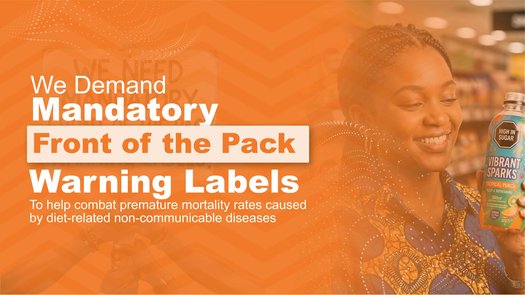
Front-of-the Pack Warning Labelling can help consumers easily identify food products high in sugar, salt and fat as well as make healthier food choices and protect themselves and their loved ones from NCDs.
Uganda has adopted a Nutrient Profile Model (NPM) that sets evidence-based thresholds for identifying foods and beverages high in sugar, salt and unhealthy fats, providing a strong foundation for clear Front of package warning labels on food products.
Adopt mandatory Evidence-based Front of the Pack Warning Labelling
Mandatory FoPWL can:
- Empower consumers to make informed food choices
- Make nutrition information easier to understand
- Encourage the reformulation of products to reduce excessive levels of sugar, salt and unhealthy fats
- Support efforts to prevent and control diet-related NCDs
- Strengthen the protection of consumers' rights to health and adequate food.
Non-communicable diseases, commonly known as NCDs are growing and represent an increasingly significant burden of ill health and death.
- NCDs currently account for 3 in 10 deaths in the country.
- According to the Uganda’s STEPS survey 2023, one of the leading risk factors driving this burden is the excessive intake of unhealthy foods and beverages that are high in sugar, salt, and fat and are linked to diet-related NCDs like cancers, stroke, cardiovascular diseases, diabetes type 2, overweight and obesity, and other disorders.
Many Ugandans find it difficult to understand the nutrition information on food packaging. This also makes it difficult for consumers to know the nutrition composition of the food and beverages they consume and consequently, to make informed and healthier choices.
This worsens the risk of NCDs, whose treatment costs are extremely high and that many consumers cannot afford.
The absence of simple nutrition warnings for products that are high in nutrients of concern, including sugar, salt and unhealthy fats creates an information gap and heightens the risk of diet-related non-communicable diseases (NCDs). The growing burden of NCDs places significant social and economic costs on individuals, families and the health system, while the costs of treatment can be very high for ordinary Ugandan households.
Front-of-the Pack Warning Labelling can help consumers easily identify food products high in sugar, salt and fat as well as make healthier food choices and protect themselves and their loved ones from NCDs.
Uganda has adopted a Nutrient Profile Model (NPM) that sets evidence-based thresholds for identifying foods and beverages high in sugar, salt and unhealthy fats, providing a strong foundation for clear Front of package warning labels on food products.
Adopt mandatory Evidence-based Front of the Pack Warning Labelling
Mandatory FoPWL can:
- Empower consumers to make informed food choices
- Make nutrition information easier to understand
- Encourage the reformulation of products to reduce excessive levels of sugar, salt and unhealthy fats
- Support efforts to prevent and control diet-related NCDs
- Strengthen the protection of consumers' rights to health and adequate food.